
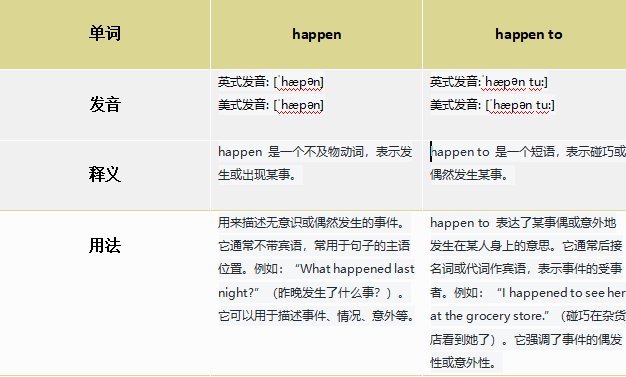
happen和happen to在释义、用法、使用环境、形象以及影响范围方面存在一些区别。以下是各个方面的比较以及例句说明:
1. 释义区别:
- "happen"是动词,意为发生、出现或碰巧遇到某事。
- "happen to"则是一个短语,表示偶然或意外地遇到某种情况。
例句:
- An accident happened on the highway.(公路上发生了一起事故)
- I happened to see her at the grocery store.(我碰巧在杂货店看到了她)
2. 用法区别:
- "happen"作为动词可以独立使用,后面直接接名词或代词作主语。
- "happen to"常与动词原形连用,表示偶然遭遇某种情况。
例句:
- It happened last night.(那件事昨晚发生的)
- I happened to find your keys on the table.(我碰巧在桌子上找到了你的钥匙)
3. 使用环境区别:
- "happen"可用于口语和书面语中,用于描述事件、情况的发生。
- "happen to"更常出现在日常对话中,用来表达偶然或意外发生的事情。
例句:
- Good things can happen when you least expect them.(好事情经常在你最不期望的时候发生)
- I happened to meet a famous actor at the party.(我碰巧在派对上遇到了一位著名演员)
4. 形象区别:
- "happen"传达了一种事件或情况的发生,没有强调是否偶然。
- "happen to"则强调了一种偶然的、意外的情况。
例句:
- The train accident happened yesterday.(火车事故昨天发生了)
- I happened to find some money on the street.(我碰巧在街上找到了一些钱)
5. 影响范围区别:
- "happen"强调具体事件或情况的发生,并且可以涵盖各个领域和范围。
- "happen to"强调个体或个人遭遇的偶然事件,更加局限于个人经历。
例句:
- Accidents can happen anytime, anywhere.(事故可能随时随地发生)
- I always happen to run into her when I'm shopping.(每次我购物的时候,我碰巧会遇到她)